Living With What Stays
Suri Grace Wong
For me, grief isn’t about losing someone…
It’s about learning how to live with something that never leaves—and how to stay in relationship with myself anyway.
I’ve lived with a chronic illness since infancy.
It has been severe at times, arriving in cycles of infections, fevers, and flare-ups that overtake my body without warning. My father, a physician, spent years trying to treat it through Western medicine. My mother later turned to Chinese medicine and naturopathic approaches.
We tried everything. Living with illness became a full-time act of care.
Over time, it began to feel as though I was raising a child—except the child was my condition.
It needed constant attention, patience, and gentleness. I learned early on that emotions don’t disappear just because they go unnamed. If I don’t process them, my body does it for me. Symptoms flare. Skin reacts. Grief, for me, is never abstract—it lives in the body.
Because my eczema is visible, it can feel like wearing a costume I can’t take off.
During difficult flares, I’m often confined to bed, and the isolation can be heavy. My illness has also quietly reshaped the contours of my life. I haven’t been able to follow a traditional career path, and I’ve had to learn how to define success on my own terms—while slowly releasing other people’s expectations of what my life should look like.
One of the most difficult parts has been how often others want to fix me.
I understand that it usually comes from care, but it can be exhausting. I’ve tried everything. What I’ve needed most has never been another solution—it’s been someone willing to sit with me as I am.
For a long time, I didn’t have language for any of this.
But even before I understood it, art was already working through some of the confusion. Art became a place where words weren’t required—where grief could move through my body, where meaning could form without explanation, where I didn’t feel alone inside what I was carrying.
Art hasn’t cured me—but it’s comforted me.
It gave me a way to stay connected to myself when my body felt overwhelming. It offered permission to feel without needing to justify or translate.
That is why the work at Rooster & Hen matters so deeply to me.
When we support artists, caregivers, and facilitators—when we care for the helpers—we make room for fewer children to feel like they are disappointing others because their bodies or emotions are “too much.” We create more people who know how to sit with what is hard. And even when words fail, we create spaces where people can still hold one another through art.
This is what hope looks like to me: not fixing grief, but giving it somewhere safe to land.
♥️
After sharing this story, I paused to notice where my heart is now.
The Heart I Chose
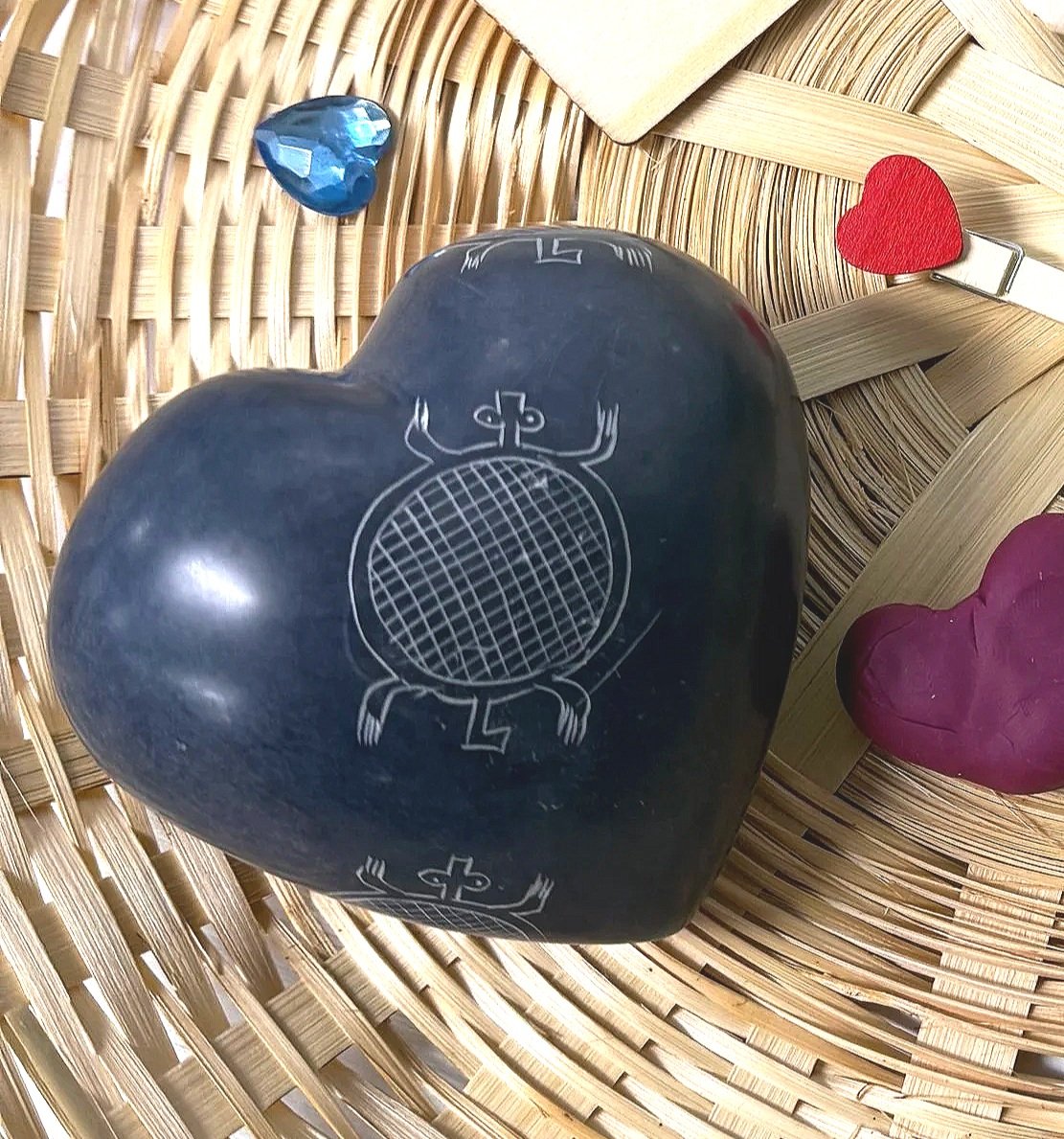
I chose a heart-shaped paperweight made of stone.
I have big feelings. And they feel very solid. I have been going through a season of deep sadness and sometimes it feels immovable until I feel joy again. This big blue heart represents the past season of loss concerning chronic illness but also the transitions with relationships and life direction.
♥️ Continue the Stories
⛅️ Add a name to our Love Cloud, jump to our form
← Back to The Love Campaign